Friday, 30 January 2015

The Film and video institute


The film and video institute is a small organisation which is based in England. The institute has little money, by is run by film making enthusiasts that do the work to keep the organisation going. The Film and video institute is a charity that anyone one can join by signing up and paying membership fee, they except anyone from beginners to experts.  By joining the charity you are able to access a whole community of film enthusiasts, were you can watch and share your own work and can receive help as you can gain access to copyright licences, music advice and receive regular copies of the Film and Video Maker. This is a good advantage as it would keep us up to date on the latest in the amateur film industry, and will provide us with a distribution method that is essential to getting our film out there and seen by potential audiences.
Joining The Film and Video Institute also has the benefit of having links with hundreds of affiliated clubs, which could provide as useful as they could offer support and provide an audience for our film Detonation 180. the institute could potentially enable us to join larger film-making groups. The institute also provides a potential distribution method of taking parts in national and international events. Events such as these would give our film a great place to be seen be audiences and to get our film known in the amateur film making community. Another great opportunity provided by the company is the choice of showing your film in there own film festival as they select the best amateur films from the uk and overseas to be aired during this event. This
would give us a good chance to get our film seen.
The Film and Video Institute run there own competition called the International Amateur Film Competition, this attracts movies from all over the world. The winning films have the chance of being chosen to represent the UK in competitions abroad. This potential opportunity would allow us to get our film aired abroad, therefore enabling us to gain foreign audiences which will make our film a success as we will be able to get support and the chance to gain a variety of audience members.


Thursday, 29 January 2015

Final Storyboard

This is our final storyboard that we will be using to film


Sunday, 25 January 2015

Distribution


We decided to do some research into different film institutions that could potentially show our film Detonation 180. We have found some companies that would show amateur film like ours to help with the distribution of our film. These filming institutions would provide our film with advertisement and would get our film out there and seen by different audiences as distribution is the process of making a film available for viewing by a audience. The obvious one we came up with was youtube. This is because youtube is a video sharing website that is popular and well know as most people us the site on a daily bases so we could easily get our film seen by potential audiences. Another, institution that we thought of was to get our film shown in a film festival. A film festival is a organised event which is a presentation of amateur films in cinemas or a screening venue. These are just two of the potential places that we could use if we wanted to distribute our film as they are both quick and simple and accept amateur films like our film Detonation 180. 

Filming of Detonation 180 continuation


In this photograph you can see us in preparation for shooting shots 13-15. The restaurant is the location that we used to film the cafe scenes outside, when the false antagonist has a run in with the waitress and customer. The cafe we originally chose to film outside had some building work being completed so we had to improvise and used the second option of sherlocks restaurant, which wasn't our original plan but we think it still was effective in providing a location to shoot these scenes outside although it did not have the same cafe appearance.

Filming of Detonation 180 continuation


In this photograph you can see us in the process of filming, luckily our filming day was a sunny one which really showed off the location of the village in our film and created a nice atmosphere to the film . We are at the location of Aylesford by the river looking at the bridge, you can see us preparing to shoot shot number four when we film Janna walking across the bridge heading towards the town. In this photograph you can see Laura holding the storyboards as we planed out each shot so all we needed to do was to follow our original ideas which made filming easier and more organised. We also used a tripod whilst filming to keep the camera still and to prevent unwanted shaking of the frame which would have made our film look unprofessional. However, we did occasionally use a hand held camera in the shots that required movement to create a distraction and make the viewer feel like they are in actually part of the film following the characters movements. 


This another shot of the bridge that we used in our film. We included the bridge in some shots and filmed shots on the bridge as well, these were shots 3-11 on our storyboard.  We also used the bridge in our establishing shot to give the viewer a general idea of where our film is set.                            

The Filming of Detonation 180


Here is a small clip, that we have edited slightly, of todays experiences of Filming. This is because we have started to film at our first location of Aylesford. The video attached includes small clips of us at the location filming, also some photographs of the various locations we used during the day. The filming that we completed during today was successful an we did not have any problems. We thought creating a small video of todays experiences of filming Detonation 180 would be a creative and fun way to show how and were we shooted the filmed.

Saturday, 24 January 2015

Red Herrings


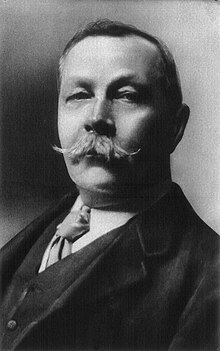
Conan doyle.jpgOne of the most renown person for making good red herrings is Sir Arthur Conan Doyle (1859-1930) a Scottish author most known for the stories of Sherlock Holmes.

 Hound of the Baskervilles is a classic example of a red herring. The readers are thrown off the real murderer and begin to suspect the escaped 'convict' and 'Barrymore'. In the end, however, the mystery is resolved by an unexpected confession of Beryl, stating that her husband 'Stapleton' was the real culprit and was behind the whole mystery of the killer 'hound'.
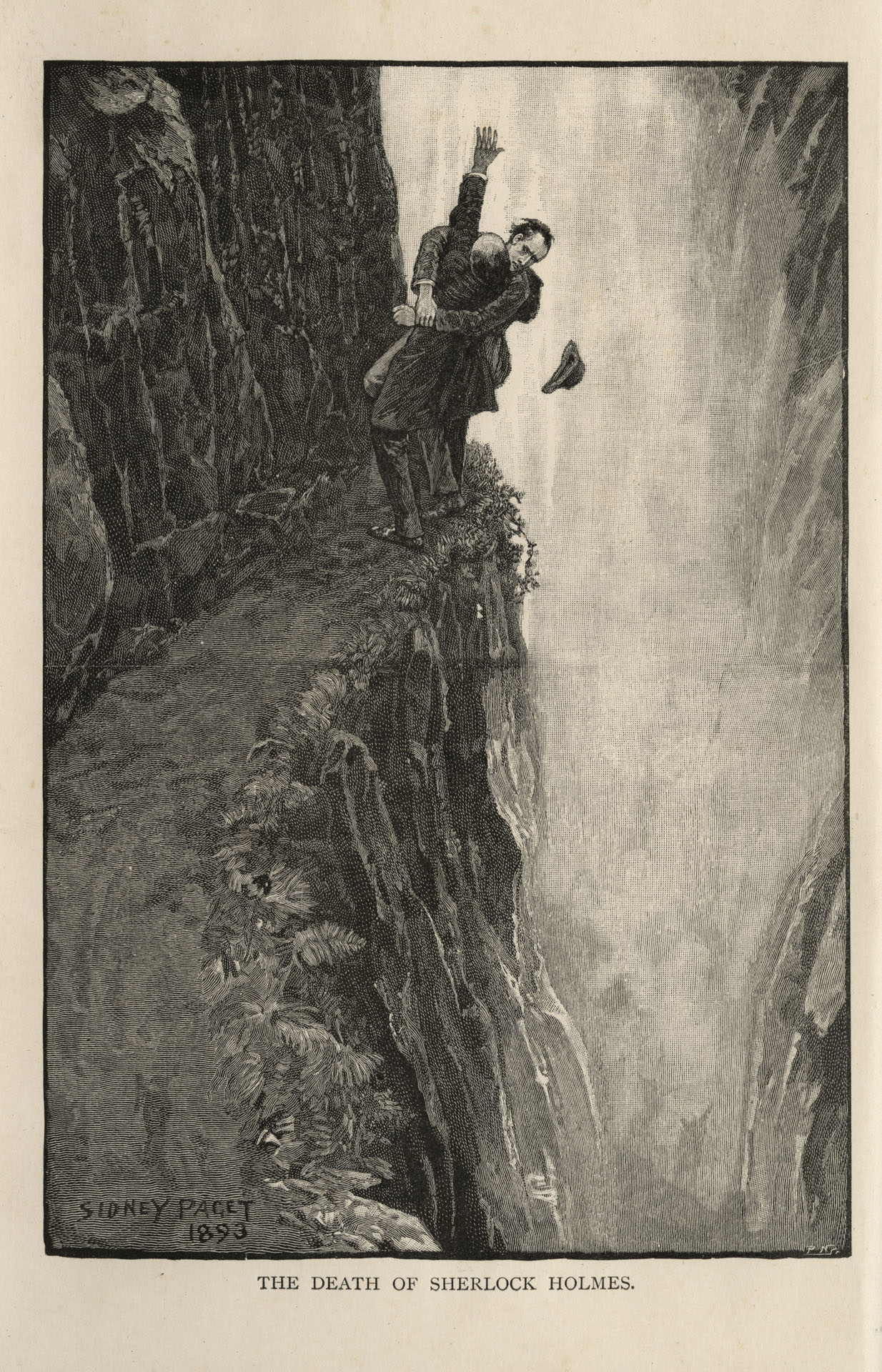
Another famous red herring can be found the the novel the Final Problem. Dr Watson is called away from a walk through the mountains with Sherlock Holmes to help an English woman in their hotel in Switzerland. As the doctor races back to the hospital he finds that there is no English woman, and that the message was sent as a red herring by the notorious villain, Professor James Moriarty. Professor Moriarty sent the message to isolate Sherlock which leads to an event known as the Reichenbach Fall, where Dr. Watson returns to find evidence of a struggle between the two men leading over the edge of a cliff. 


Friday, 23 January 2015

Our Soundtrack


We looked into some different soundtracks we could use to help portray the suspense of the beginning of the film- a few were just too upbeat and dramatic. For example, bands like Two Steps From Hell or Audiomachine create fantastic instrumentals that have been effectively used in trailers, but we didn't feel like they helped create the mood in the story, they felt more 'epic' and 'battle' like, which didn't fit in with our village settings.

  So we then studied several soundtracks from films. It was tricky finding soundtracks the creating the right effect. We looked through the soundtracks of thriller films, like Silence of the Lambs, but nothing quite made an impact.

 However, completely by fluke, as we were working we played a song that one of us knew and immediately we all agreed that that was the song we wanted. The beginning was calm and beautiful, depicting the calm village, as the song goes on, you can hear a slight tension and suspense to it, which builds up into a dark intimidating tune.

 The song is from the film 'Star Trek into Darkness' and is an extended version including the two songs, 'London's Calling', the first, calm tune, and the second 'Ode to Harrison', being the loud upbeat instrumental. The songs are written by Micheal Giacchino- he and the director wanted to make it feel as if they weren't in a Star Trek movie, "twisting things to make it fit right", as they described it. 'London's Calling' is a prime example of this. Giacchino said "It was a very conscious decision to make that base sound different; then, from there, we were able to evolve to our theme for the character. I remember when J.J. [the director] heard it, he said, 'Oh it sounds English. That's perfect!' ... I was just going for something that felt emotional and questioning as opposed to being so direct that it tells you whats going on."

This is why we chose it- the questioning feel it creates, the lingering suspicion and tension throughout the first piece of 'London's Calling' and the threatening dramatic tune of 'Ode to Harrison' could be used when we introduced a more dramatic scene or occurrence.
 We will edit the tune accordingly so it fits in with the appropriate scene as the extended version is over 12 minutes long and uses many repeats, but we chose to use the mash up instead of the two separate songs as certain parts are already merged together without it being obviously edited, making it easier for us when we do the same.


Thursday, 22 January 2015

Our Red Herrings


In our thriller film, Detonation 180, we will be using red herrings as a device in our plot to create an enigma which is a vital part of a thriller. Our red herrings main aim will be to confuse the audience and mislead them into thinking they have discovered the plot of the film but they have in fact been mislead into believing it. We will be using using two red herrings that come in the form of a brief case and a false antagonist. Janna will be playing the role of the false antagonist which we included to confuse the audience. The character will be a false antagonist as the whole three minutes of the opening sequence will revolve around this character and will show his interaction with other characters which will be rather odd and will draw you to the conclusion that he is in fact the antagonist. This however is the red herring as this character is not actually the antagonist but you come to realise that he is an innocent victim. In films a common way of revealing that the antagonist is a false one is to 'dispose' of them. This is what we will be doing as the red herring comes to an end as the character will be killed in the ending of our thriller as he will board the train which will be blown up.
Our second red herring will be the brief case that Janna (the false antagonist) will be carrying around with her during the whole of he sequence. This is because the brief case is a good prop that goes with the outfit and personality of the character as the brief case conforms to the stereotypical business man outfit. Not only does the brief case serve as a prop but as a distraction as the way the false antagonist will be acting in the sequence will draw the audience to the conclusion that he is an antagonist, and because of this the brief case will then become suspicious as he will be carrying it the whole time. Also due to the fact that we are setting our film in Aylesford, also makes the brief case a successful red herring as Aylesford is quite a rural town, this then will plant questions in the viewers eyes as he will look out of place bringing in this setting looking like a smart business man. Also we will be building tension up as he enters the train station by increasing the intensity of the soundtrack, this will then lead to shot number 36 when the false antagonist is seated on the train with the brief case on his lap which he will slowly open, the following few shots will be of a black screen, train and a bomb ticking which will slowly zoom to the clock of the bomb the editing pace will be fast and will flick from one to the other very fast.  As the brief case is a red herring the audience will think that the brief case will have some significance due to the tension increase, however as the tension builds right up the red herring will be revealed as it flicks back to the false antagonist and he pulls a sandwich out of the case and nothing major happens. This will then cause mystery because as an audience you wonder  what the characters motive actually is and realise that they have fallen for the trick.  

Agatha Christie- Red Herrings


Agatha Christie, although a writer, is a great example of how to use red herrings. This is because she used many red herrings as her device in her writing to mislead and confuse her readers. For a reader of Agatha Christies you have to work out the clues that she gives in her books, however it is hard to work out what are clues or what are just red herrings, sending you down the wrong path. Agatha Christie’s red herrings are sometimes linked to unrelated minor crimes, which the reader is lead to believe might be connected to the murder but later the reader is surprised to find out that they have come to the wrong conclusion. Christie uses red herrings to frame her characters so that you believe that they are the murderers, however it is often the least likely and unsuspected character that is the true criminal but they go unnoticed by the reader as they are mislead by the use of the red herring. Although Agatha Christie is a writer and not a film director we chose to look at her as she is a true master at successfully tricking and confusing her readers which is a the key aspect to the use of a red herring, which we would like to create in our own thriller film and looking at her work gives us an insight into what we must do to successfully use this plot device. 

Red Herrings in Films


During my research of Thriller films we discovered that a device to create tension in the thriller genre is to use a red herring. To recap, a red herring is something that distracts or misleads the viewer from relative or important issue in the film so you are left shocked when the real plot is revealed. Red Herrings can be characters in the film or just a prop which you think will have a role in the plot but then realise that the item has no significance at all.

 We have completed some research into some films that have used red herrings, however that are not al thrillers but are good examples of red herrings. The following films use red herrings:


Kindergarten Cop-
This film is about a character named John Kimbel who is a cop that is working under cover as a teacher in a Kindergarten, but he is really trying to search for a killer that is trying to kill someones wife and son. John however does not know what the women or child look like so he has to find them, but throughout the film we are lead to believe that a different child in the class might be the possible victim,, until the true one is revealed. 


The Da Vinci Code-
This film has a storyline which has lots of different twists and turns and uses a good red herring. Throughout the entire film the audience is tricked into thinking that Bishop Aringarosa is the culprit of the crime of a Vatican cover up. However, we then realise that this character is actually just a red herring which stops us from seeing who the real criminal is. 


Scream-
In this film there is a red herring in the form of costume. This is because as an audience we are told that the murderer was wearing the same shoes as the police chief. This then leads us to think that the chief is intact the murderer, however the chief is in fact not the criminal and we do not see him in the film again. 


Red Herrings are not only used in films but by writers such as the famous Sir Arthur Conan Doyle and Agatha Christie used red herrings in there writing. Also the famous thriller directer Alfred Hitchcock was known to use Red Herrings techniques to keep his audience from realising who the real antagonist in the story is, for example Psycho.  

Storyboard Draft 1

Here we began to create the idea of what we wanted to see in our film. We planned the general shots we would use and where the camera would need to stand to film she shots. We also began thinking about what camera movements we wanted. We had a rather clear image in our mind of what we wanted so it was rather easy to begin planning. 


Thursday, 15 January 2015

Stereotypical Costumes


Costumes are used in all films and often refer to the typical stereotype of that character. This then means that the audience can automatically see what type of character that person is going to be by simply looking at then, as the audience can automatically cast a judgment. Stereotypical characters are always shown through there costume in all aspects of film and television. For example, the stereotypical teenage school girl character will often be portrayed as being a 'slut' and costume helps to show this stereotype. This is because the character would wear a costume that will include things such as a short skirts, short tie and commonly wear blouses revealing cleavage and parts of there stomach, also they would use props such as a phone as teenagers are often known for being constantly on there phones. 


Another character that is commonly stereotyped in films is the typical 'Londoner'. This is because there is this idea that they are the typical British man, being posh, upper class, well spoken and often being well presented. This is portrayed in there stereotypical costume, being smart expensive business wear. This includes things like a  suit and tie and being 'well groomed' and handsome.


Research on thriller films

Speed

Speed is about a police man, named Jack, whose job it is to deal with bombs when he and his fellow officers are called to a threat including a bomb and an elevator. He soon realises he is in for something bigger after they deal with the elevator bomb. They discover the bomber is a lot more intelligent than he seems. Jack is then put up against having to deal with another bomb which then puts the general public and his own life at risk.
The film is very fast paced and exciting, so the audience is always at the edge of the seat. The film includes a bomb that is placed in the bus so that once over 80 mph, they cannot go below that speed or the bus will explode with the passengers on board. The use of the bomb creates drama and create a risk for the characters making the film more entertaining for the audience.

Research on Insidious


Insidious is a thriller/Horror film produced by Jason Blum, Insidious is about a little boy who gets possessed by a demon and gets taken to a world nobody knows existed. Insidious is a very dark thriller film. At the beginning of the film there is a very eerie piece of music that puts you on edge when watching. When watching the film I also noticed it was very black and white and very ghost like, almost like the producers and directors wanted the audience to feel the tension. When some characters where talking towards the end of the film, the voices echoing into the distance which added to the ghost like effect on the film. The characters were also wearing very dull clothing, this added to the effect through the film as the situations got worse the clothes got more dull which makes it seem like they weren’t putting any effort in, the producers wanted the audience to feel this way to give them an idea of how the characters where feeling and how they effected their clothing etc… This is also the same as their makeup, all actors involved with this film where very white and pale which could add to the ghost like effect. This film gave me a good idea of the type of music and costume and makeup for our own film.

Soundtracks


Background music is used to add emotion and rhythm to a film. Usually not meant to be very noticeable. However, it often provides a tone or an emotional attitude toward the story and the characters for the audience to feel what the characters are feeling. Background music can, often foreshadow a change in mood. For example, some soundtracks may be used in a film to indicate an approaching character to build tension, such as the soundtrack for Jaws.


Background music may aid the audience by understanding by linking scenes and characters. For example, a particular musical theme associated with an individual certain character or situation may be repeated in different situations.Film sound is comprised of conventions. We have come to expect the music to get faster during car chases and the atmosphere to become silent in horror films. Yet, it makes us more aware of film sound.
Soundtracks are used in thriller films to build tension and suspense during certain scenes to prepare the audience for something that may be about to happen.


Wednesday, 14 January 2015

Thriller Film Directors

David Fincher

David Fincher is an American director and producer who was born in August 28, 1962.He was nominated for the Academy Award for Best Director for films The Curious Case of Benjamin Button   and The Social Network. Some of his most famous work was his role as director in the films Seven, The Fight club and Zodiac.  

Seven was one of David Fincher's most well known work as a director. Seven is an American Psychological thriller but also includes themes of both horror and crime.The film was released in the United States on September 22, 1995. The film had a budget of $33 million but ended up Grossing $327 million at the box office internationally, Seven was a commercial success and received positive reviews. 
Seven was set in Los Angeles, California. Fincher decided to take a simple approach to camerawork and he was influenced to do this by the television series of COPS as there were many shots that were set in the backseat with the camera peering over peoples shoulders. 

Seven also had the benefits of having an all star cast. For example the film included famous actors such as Brad Pitt, who played the role of Detective David Mills and Morgan Freeman, as Detective Lieutenant William Somerset. 

Different Roles in Film Production


Film production


There are many different roles in the production process of a film, from post production to pre production. These roles play a essential part of the creation of the film and all films must include them.  Here are a list of some of these roles  and the description of what these roles actually include:


Producers- They have to prepare and then supervise the actual making of the film. They have overall        
                   control of every aspect of the films production.  producers can ever be independent or
                  employed by the production company. 

Associate Producers- They assist the producer in putting the film together. For example they may
                                   assist the writing, editing and script organisation of the film.
Directors- They have to interpret the script and make it into reality by making the film
                 using this script. Directors often have to plan for things such as film locations, shots, 
                 pacing, acting styles and anything involving the visual effect of the film. Directors often
                 provide coaching for the actors to help them perform the role required, they also often 
                 coordinate staff on set, direct the shooting timetable and they also ensure deadlines are 
                 met.

Art Directors- They are responsible for the visual design and creation of advertisement which must be 
                        eye catching to help advertise the film. They are responsible for the overall design and 
                        direct other who work in the visual arts department of the film production.

Screenwriters- They create the screenplay or script for the film. These screenplays can be original or 
                        adaptations of existing pieces of writing. Screenplays consist of the movement,    
                        actions, expression, and dialogue of the characters.


Editors- Film editors work with the footage that has been shot, they select the shots they want use and  
             combine them into a sequence to create a finished film.  Film editors must put the film into a 
             overall final package setting the mood, pace and flow of the story/film.  


Sunday, 11 January 2015

Production Company Research

DreamWorks

DreamWorks was founded in October 1994 by Steven Spielberg, Jeffrey Katzenberg and David Geffen. It was first owned by Independent, after that Paramount Pictures but today is owned by Reliance Entertainment. The Headquarters can be found in Universal Studios. Their aim was to be a live-action and animation film studio, which very few companies attempted due to the high costs. To manage the high costs, they decided to make no more than 9 films a year and would be able to occasionally work with other companies if they so wished.  
 DreamWorks generally creates films aimed at a younger audience. They created films such as Madagascar, Big Hero 6 and Shrek, which all lie in the Family Genre.

DreamWorks also gained money through a separate division- DreamWorks Interactive, where its game could be created and distributed to earn the company more money. DreamWorks has many divisions suited for many things such as; DreamWorks Animation, Television, Home Entertainment, Records and Interactive. Animation focuses on animated movies such as Shrek-this is probably the most known division and DreamWorks Television creates TV shows such as Band of Brothers.

The Company used to distribute its own films, until they were owned by Paramount- where they helped distributes their films until the partnership ended in 2008. They are now partnered with Twentieth Century Fox.


DreamWorks Dragons

How to Train Your Dragon is an American computer animated action-fantasy film made in 2010 by DreamWorks Animation. It was very loosely based of the book series by Cressida Cowell and was directed by Chris Sanders and Dean DeBlois- the directors of Lilo and Stitch.
It is set in a mythical Viking world, Hiccup, a teenage Viking, aspires to become a dragon slayer and follow the Tribes tradition. He manages to capture the rarest and most dangerous known dragon- the Night Fury. He plans to kill the beast and finally gain the tribe's acceptance, but as he stares into the dragon's eyes, he finds he cannot kill him.
 The story follows the unlikely friendship that the two form and how, together, they save the tribe from the Queen dragon, the Red Death.

The film became a critical and commercial success, earning nearly $500 million worldwide.
How To Train Your Dragon was nominated for the Academy Award for Best Animated Picture and BEST Original Score, but won ten Annie Awards, including Best Animated Feature.


A sequel, How To Train Your Dragon 2, was distributed by 20th Century Fox in June 2014 and was a box office success. This film takes place 5 years after the first film, featuring Hiccup and his friends as they meet Valka, Hiccups long lost mother and Drago Bludvist, a madman who aims to control all the dragons to rule the world.
 Critics praised the film for it's animation, as DreamWorks benefited from advances in animation technology, such as new animation and lighting software, giving the film a more realistic feel.  The film grossed over $618 million worldwide, making it the highest grossing animated film of 2014 and the eighth highest grossing film of the year overall.
DreamWorks is planning another sequel, How To Train Your Dragon 3, which is to be released in 2017.
 The films success also inspired other merchandise such as a video game and a TV series. 

Thriller Film Study


Imitation Game (2014)

The Imitation game is directed by Morten Tyldum and is loosely based on the biography 'Alan Turing: The Enigma'.

 The Imitation Game is a Historical Thriller about a British Mathematician, cryptologist and pioneering computer scientist, Alan Turing, played by Benedict Cumberbatch. The film was based during WW2 and the cracking of the Nazi German Code- Engima.

Alan Turing built a machine that would crack any code so that the allies would know  the movements and attack plans of the enemies. They strategically plotted which battles to win, and which to lose, so that the war could be won without the Germans knowing that the code had been cracked. After the war, Alan Turing was prosecuted for being homosexual.


The film was distributed to both UK and US by companies Studio Canal and The Weinstein Company. The Weinstein Company paid $7 million to the rights to distribute in the US, the  highest amount ever paid for the US at the European Film Market. The film featured at the Toronto Film Festival and won "People's Choice Award for Best Film", the highest award for the festival.
 It was nominated for five categories in the Golden Globe Awards, including Best Motion Picture- Drama, Best Actor- Motion Picture Drama, Best Supporting Actress- Motion Picture and was also nominated in three categories at the 21st Screen Actors Guild Awards. The film cast and crew were also honoured by LGBT  Civil Rights for making the audience aware of Turing's  legacy.

The film had a budget of $14 million and earned $64.3 million on the box office.

Research: Film Director


 Quentin Tarantino

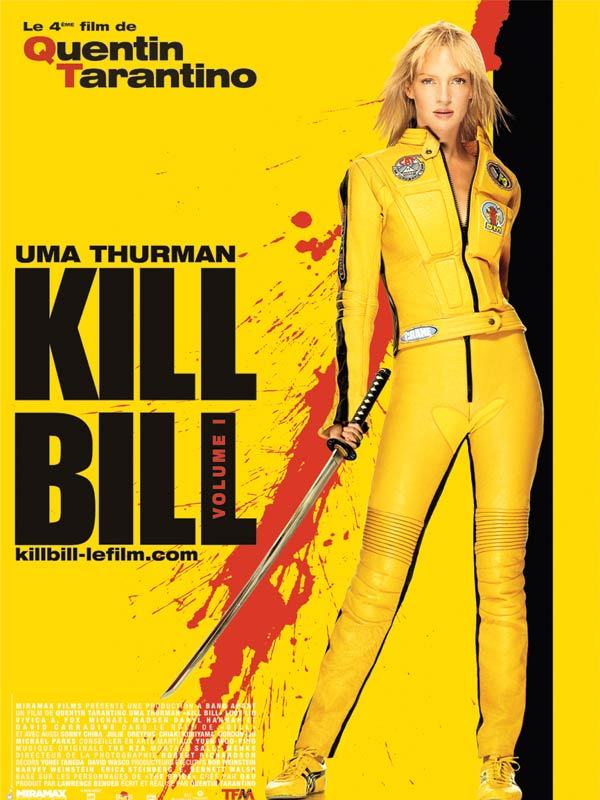
Quentin Tarantino (born 1963) is a famous American director, screenwriter, cinematographer, producer and actor. His films are normally ironic and not in chronological order and usually include a lot of violence. Tarantino's films are widely known and received many awards such as two Academy Awards, two Golden Globes Awards, two BAFTA Awards and has been called "the single most influential director of his generation".

Tarantino films are mostly famous for their violence and bloodshed- the violence scenes are always long and dramatic and have active blaring soundtracks. The director is well known for his love of films, and likes to pay homage to other mediums by filming scenes similarly, resembling the work of other directors or even including references to other films.

He also likes to tell multiple stories simultaneously that only mold together at the end to form one large story with different perspectives. He uses this technique in Pulp Fiction, one of most famous films, where three separate stories are told out of order, where characters that are killed in one story reappear later as their story has not yet been told.

Here are some Thriller Films Tarantino made:
  • Pulp Fiction
  • Kill Bill
  • Reservoir Dogs
  • From Dusk til Dawn
  • Sin City